If you own a photovoltaic system on Mallorca and return to the island in early June, the scene is familiar: glass surfaces covered by a fine reddish layer, an inverter that is not quite matching its April output, and a garden where trees have grown noticeably since your last visit. A well-planned solar panel summer maintenance routine decides whether your system delivers a strong July and August or whether fifteen percent of the seasonal yield quietly disappears.
The good news: effective solar panel summer maintenance rarely requires a large investment. It comes from a few targeted routines, a clear understanding of calima and heat, and a cleanly configured monitoring set-up. This guide walks you through the levers that matter most, the steps you can take in the fourteen days before peak season, and how to identify from a distance when a technician needs to climb onto the roof.
Why solar panel summer maintenance on Mallorca matters now
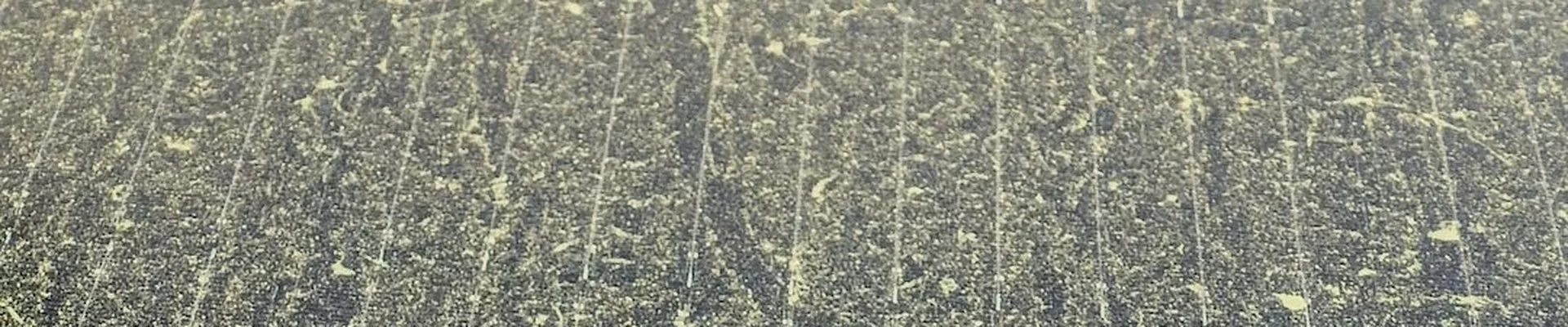
The Mediterranean is changing. Local meteorological records show that the number of calima days on Mallorca has risen visibly during the last decade. Saharan dust does not only land on furniture and pool covers; it also forms a sticky film on modules that scatters and absorbs incoming light. Effective solar panel summer maintenance therefore begins with the recognition that summer soiling is not a cosmetic issue, it is a direct revenue lever.
Recent studies on the impact of dust on photovoltaic systems document substantial losses. Six months without any cleaning can reduce output by up to fifty percent, and a single strong dust event can knock off around twenty percent. In the dry Mallorcan summer, where rainfall between May and October is almost non-existent, daily fractions of a percent compound into double-digit losses. A planned solar panel summer maintenance routine prevents this silent yield gap.
The Spanish energy agency IDAE also defines clear minimum maintenance intervals in its technical specification for grid-connected systems. Plants up to one hundred kilowatts of peak power require at least one annual inspection, with semi-annual visits above that threshold. If you own a second home on the island and spend only part of the year on site, treat that recommendation as a floor and tie your solar panel summer maintenance schedule to local conditions on top.
The regulatory horizon is also shifting. The revised European Energy Performance of Buildings Directive (EPBD 2024/1275) places self-consumption, energy efficiency and system upkeep on the same footing for the first time. A documented solar panel summer maintenance routine becomes more than a comfort choice: it is a value-preservation argument for the property and an asset in future sale negotiations.
What really costs you yield in summer
Before you reach for a brush, it is worth understanding the loss categories precisely. Good solar panel summer maintenance separates three clearly identifiable effects that occur simultaneously and together can cost significantly more than twenty percent of the theoretical summer output.
The first effect is uniform soiling. Saharan dust, pollen, salt mist and the characteristic reddish deposits after a calima event spread evenly across the glass and reduce irradiance reaching the cells. An average daily loss of around one percent is typical in dry Mediterranean regions, and without rainfall this layer bonds stubbornly.
The second effect is temperature dependence. Crystalline silicon modules lose between 0.3 and 0.5 percent of rated output per degree above the standard test condition of 25 °C. With a module surface reaching 60 °C around midday in midsummer, the resulting discount is ten to fifteen percent below the datasheet. Solid solar panel summer maintenance therefore inspects rear ventilation, not only the glass.
The third effect is point shading. A single shaded module can pull down an entire string if internal bypass diodes are not working correctly or if no power optimiser is installed. Spring shadows are shorter, midsummer shadows longer and in different directions. Honest solar panel summer maintenance maps these seasonal shadows again every year.
| Loss category | Typical range | Effective measure |
|---|---|---|
| Calima and dust layer | 5 – 20 % per event | Clean modules, link cleaning interval to weather |
| Module over-temperature | 10 – 15 % at midday | Ensure rear ventilation, review mounting clearance |
| Vegetation and equipment shading | 5 – 30 % per string | Pruning, module relayout, add optimisers |
| Inverter sensor drift | 1 – 3 % unnoticed | Update firmware, recalibrate sensors |
Solar panel summer maintenance step one: safe module cleaning
Cleaning is the most visible and most underestimated part of solar panel summer maintenance. The baseline recommendation for Mallorca is to clean every three to six months, plus one additional pass after every major calima event. Coastal installations benefit from the shorter interval because salt mist increases the adhesion of dust.
Five rules deliver a strong result without damaging the modules:
- Pick the time of day: early morning or late evening, when modules are not hot. Hot glass and cold water can create micro-cracks.
- Use the right water: soft or ideally demineralised water avoids limescale films that later scatter light again.
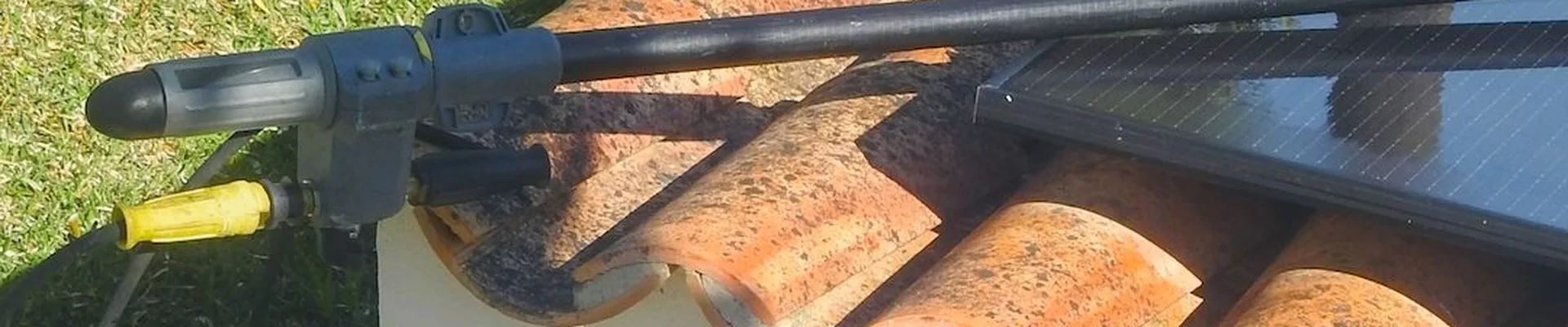
- Stay mechanically gentle: a soft brush on a telescopic pole, no pressure washer, no steel wool, no solvents.
- Do not walk on the modules: modules are not a walking surface. Stepping on them risks cell fractures that remain invisible to the eye and surface years later as hotspots.
- Safety first: for roof pitches above 20 degrees or working heights above three metres, always use a specialist company with anchor points and personal protective equipment.
Responsible solar panel summer maintenance documents each cleaning with date, weather and before-and-after photos. This audit trail simplifies later warranty cases and enables honest yield comparisons before and after the intervention. You can read more about our cleaning protocols on our Maintenance page.
Temperature coefficient and back-ventilation explained
Heat is the invisible brake on every Mediterranean photovoltaic system. A solid solar panel summer maintenance routine treats this subject systematically, starting with the question of how much air gap actually exists between module and roof skin. On classic on-roof installations a ventilation gap of at least ten centimetres is standard practice because a chimney effect develops underneath and actively cools the modules.
Three points become especially relevant in peak summer:
- Reflective roof surface: a white-coated or light-coloured roof under the modules reduces back-radiation and can lower module temperature by up to five degrees.
- Clear ventilation channels: leaves, nests and pollen can clog the gaps. A visual inspection belongs in every solar panel summer maintenance visit.
- Inverter in shade: the inverter itself should be cool and ventilated. High ambient temperatures noticeably shorten the lifetime of the electronics.
For long-term tracking, record module temperature at midday with a contactless infrared thermometer. Multi-year data points enable an honest trend comparison and represent the most reliable success metric of an optimised solar panel summer maintenance programme across several seasons.
Seasonal shading and vegetation checks
A system that was shadow-free in February may not be in July. The sun position shifts, trees grow, neighbours add antennas, air conditioning units or wooden pergolas. Every careful solar panel summer maintenance plan therefore includes a fresh shading assessment around the summer solstice on 21 June, when the sun reaches its highest point.
A workable sequence looks like this:
- Photo sweep: one picture every thirty minutes from the same position between 9 a.m. and 6 p.m.
- Name the shadow source: tree, chimney, antenna, wall, each with compass direction and height.
- Decide the action: garden pruning, relocation of installations or adding power optimisers to the affected modules.
- Measure the effect: daily yield per string before and after the intervention.
On Mallorcan plots, pines, carobs, almonds and olives are the most common shadow sources. Moderate pruning in early summer is ecologically uncritical and a natural component of a clean solar panel summer maintenance routine. On listed properties we always clarify allowed interventions with the municipality first.
Solar panel summer maintenance remotely with monitoring
Second-home owners are rarely on site every day. That is exactly why remote monitoring sits at the heart of modern solar panel summer maintenance. Current inverters send string values, module temperatures and voltage data every minute to a manufacturer app that runs on any smartphone.
Three indicators deserve constant attention from a distance:
- Daily yield in kilowatt hours compared against a reference day from the previous year.
- Performance Ratio as the ratio of real yield to theoretical maximum at current irradiance.
- Differences between strings as the earliest signal of a module or shading problem.
Good solar panel summer maintenance defines thresholds that trigger an automatic alert. Whenever the Performance Ratio drops below 75 percent for three days in a row, or a single string deviates more than ten percent from the average, our team turns up without being asked. You can read more about our service on Photovoltaics.
Table: mistakes and good practice in solar panel summer maintenance
Many owners repeat the same mistakes. The overview below bundles the most common anti-patterns and pairs them with the robust alternative, turning solar panel summer maintenance from a vague feeling into a clear plan.
| Common mistake | Consequence | Better practice |
|---|---|---|
| Pressure washer on modules | Cracks, warranty void | Soft brush, demineralised water, telescopic pole |
| Cleaning a hot module | Micro-cracks from thermal shock | Cleaning in early morning before direct sun |
| No shade audit in summer | Up to 30 % string loss | Shading photos around the solstice |
| Inverter in a hot room | Shortened electronics lifetime | Relocate to a cool, ventilated area |
| No remote access enabled | Silent yield loss | Manufacturer app with threshold alerts |
| Cleaning only in autumn | Summer losses already incurred | Clean before and after each calima wave |
| Walking on the roof unassisted | Fall risk, cell fracture | Specialist firm with safety harnesses |
| No documentation | No basis for comparison | Logbook with date, photo, yield data |
14-day plan before the summer peak
Fourteen days are enough to make a neglected system summer-ready. The following sequence has proven itself in many projects and turns solar panel summer maintenance into a planned task rather than a hectic reaction.
- Day 1: review monitoring data from the last 12 months and identify the loss curve.
- Day 2: ground-level visual check of all modules, cables and connectors with binoculars.
- Day 3: shading photo sweep between 9 a.m. and 6 p.m.
- Day 4: map vegetation around the system and plan any pruning.
- Day 5: book a professional cleaning slot.
- Day 6: update inverter firmware and reconfigure the manufacturer app.
- Day 7: activate thresholds and alerts in the monitoring portal.
- Day 8: carry out the cleaning, document yield before and after.
- Day 9: inspect the rear-ventilation gap, remove nests and leaves.
- Day 10: check earthing, surge protection and circuit breakers.
- Day 11: inspect the battery system, read cycle count and remaining capacity.
- Day 12: compare Performance Ratio against last year’s reference.
- Day 13: update the maintenance log and sort warranty documents.
- Day 14: plan the next intervention, ideally after the next calima.
Anyone following this rhythm runs a solar panel summer maintenance programme aligned with the IDAE recommendation and with manufacturer warranties. More seasonal posts are available on our news section.
Solar panel summer maintenance while the owner is away
The reality of many Mallorca installations is clear: the owner is often on the island in July and August but does not see the house for weeks in September, October or May. During that time you need a reliable pair of eyes locally and a smooth solar panel summer maintenance routine running in the background.
Three building blocks secure operations even in absence:
- Service authorisation: a clear written permission to perform cleaning and repairs up to a pre-defined cap without asking again.
- Direct emergency access: our emergency service responds within hours if an inverter fails completely or a fire risk arises.
- Quarterly report: a compact PDF with yields, cleaning photos and recommendations replaces the need to be on site.
This way solar panel summer maintenance remains dependable even when the owner is hundreds of kilometres away. Many of our second-home customers sign a maintenance contract with a fixed annual fee, which provides planning certainty and transparent costs.
Common mistakes in solar panel summer maintenance
Even experienced owners repeat the same patterns. A successful solar panel summer maintenance routine avoids six typical pitfalls that separate a mediocre from an outstanding installation year.
- Climbing onto the roof yourself: the biggest risk is not module damage but your own fall. Several deaths per year are documented.
- Cleaning with tap water: Mallorcan tap water is hard and leaves a limescale film that later reflects light.
- Cleaning only after summer: by September the damage has already happened and cannot be recovered.
- Ignoring the inverter: most of the electronics live in the inverter, not the module. Without firmware care data losses pile up.
- Outdated insurance: the system value and the insured sum drift apart over time.
- No service contract with a specialist: spontaneous high-summer slots are more expensive and harder to book.
A professional solar panel summer maintenance programme integrates these themes into a single routine instead of spreading them across the year. That saves time, money and stress.
Solar panel summer maintenance with Greentech Balear
We have been looking after photovoltaic systems across Mallorca for years, from a compact 4-kWp on-roof system on the edge of Palma to a 30-kWp finca installation in the Tramuntana. Our approach to solar panel summer maintenance is modular, transparent and adapted to the reality of second-home ownership.
What you can expect from us:
- Visual inspection and cleaning twice a year, plus on demand after calima waves.
- Monitoring set-up on the manufacturer app with alerts routed directly to our team.
- Annual maintenance report with yield benchmark, cleaning photos and concrete recommendations.
- 24/7 emergency line for complete outages.
- Clear fixed prices with no hidden costs.
Good solar panel summer maintenance is not a cost item, it is a yield protector. Owners who care for their plants correctly secure double-digit additional output over twenty years of operation compared with a neglected system. More on our Photovoltaics and Maintenance pages.
FAQ on solar panel summer maintenance
How often should solar panel summer maintenance happen on Mallorca? At least once per season, plus an extra clean after every significant calima event. Coastal owners benefit from a three-month cycle.
Is a rainstorm enough to clean the modules? No. Calima rain carries clay particles that form a hard crust. A standard summer shower is not enough to dissolve that layer.
How much does a professional cleaning cost? On Mallorca prices range between five and twelve euros per module depending on system and roof type. Bundled contracts reduce the unit price noticeably.
Can I clean the modules myself? For a flat garage installation close to the ground and without fall risk, yes. On pitched roofs always hire a specialist company.
Why is my summer yield falling even though the sun is stronger? Module temperatures exceed 60 °C under full irradiance and the temperature coefficient pulls efficiency down. Good rear ventilation softens the effect.
What does a power optimiser bring in summer? It decouples individual modules from the string and reduces losses under partial shading significantly. It is particularly useful on installations with new shadows from vegetation.
How do I notice a problem from a distance? The manufacturer app shows the Performance Ratio. Values below 75 percent over multiple clear summer days are a strong warning signal.
Are cleaning costs tax-deductible? For self-consumption systems Spanish tax rules on operating expenses or capital improvements apply. We recommend confirming with your accountant.
How long does a full on-site solar panel summer maintenance visit take? For a typical 6-kWp system, allow two to three working hours including cleaning, visual inspection and monitoring updates.
A carefully planned solar panel summer maintenance routine is the best-paid hour across the entire life of a photovoltaic installation. Greentech Balear walks you through every step, from the first photo to the annual report. Call us on +34 644 450 672 or write to info@greentechbalear.com, and visit our page on Photovoltaics.
Further reading: the Spanish energy institute IDAE and the current Photovoltaics Report from Fraunhofer ISE.