FOTOPAR 2026 grant is the headline opportunity many island homeowners have been waiting for: a structured way to support solar PV and battery storage when your property is used seasonally, close to the sea, and often managed remotely. If you own a second residence on the Balearic Islands, you already know the pattern: long standby periods, short “high-comfort” stays, and a strong desire for reliable energy without constant supervision. The right system can turn that into day-to-day simplicity.
This guide explains what the FOTOPAR 2026 grant covers, who can apply, the key dates, and how to plan a project that works for a second home—not just for a permanently occupied main residence. You will also see how to combine solar + battery for holiday home use cases with coastal home solar self-consumption strategies, so your installation is not only compliant, but genuinely useful.
Important: the FOTOPAR 2026 grant is designed for private individuals and includes a domicile requirement in the Balearics. Eligibility depends on your personal situation, so always validate details on the official page before you commit to purchases or works.
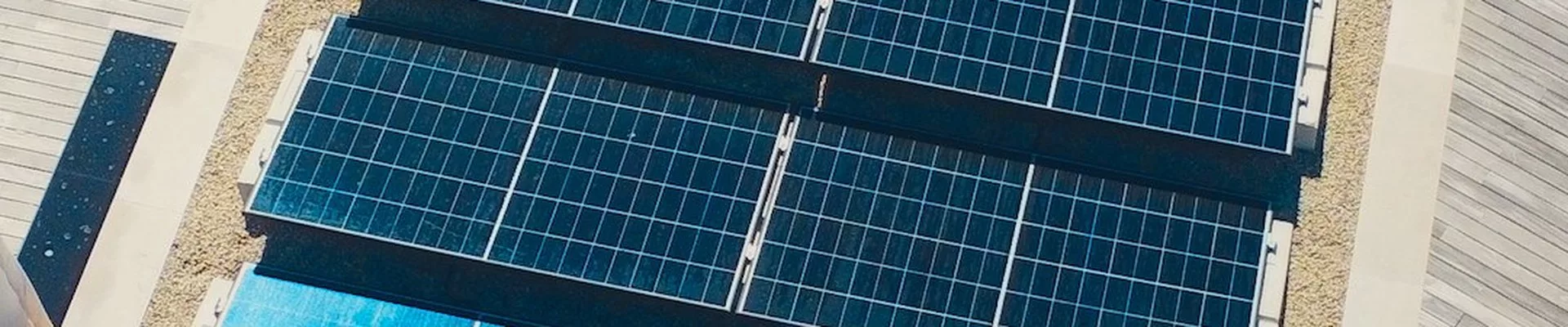
What the FOTOPAR 2026 grant is and why it matters for island properties
The FOTOPAR 2026 grant is a public incentive scheme linked to FEDER 2021–2027 funding that aims to accelerate residential renewable installations and storage for private homeowners in the Balearics. For island properties—especially coastal homes and second residences—the practical value is often higher than on the mainland, because energy reliability and remote management matter more.
A second home is not “used less”, it is used differently. Your most expensive hours are usually the first 24–48 hours after arrival: you want comfort immediately, and you do not want to spend the trip coordinating repairs. With the right system design, the FOTOPAR 2026 grant can help you build self-consumption, improve resilience, and create a predictable energy routine.
For many owners, the emotional driver is also important: you want the house to feel “yours” the moment you arrive. That means the Wi-Fi is online, the fridge is cold, the hot water is ready, and the air conditioning works without error messages. In a second home, these are not small details; they are the difference between rest and administration. A well-designed PV + storage system reduces those friction points, because it supports a stable baseline of power and makes operating habits easier to manage.
Who it’s for: eligibility and domicile requirement
The first filter is simple: the FOTOPAR 2026 grant is targeted at private individuals (not companies) and requires domicile in the Balearics. For international owners, this is the point that needs early clarification. Ownership of a property is not the same as “domicile” in administrative terms.
Before you do anything else, confirm three items:
- Applicant status: you apply as a private individual (not through a company structure).
- Domicile: you meet the domicile requirement in the Balearics.
- Property context: the works match the program’s eligible residential use case.
If you are unsure, start with the official procedure page and read the eligibility section carefully: Official FOTOPAR2026 procedure page (CAIB e-office).
Typical goals: self-consumption, resilience and comfort near the sea
Owners usually pursue the FOTOPAR 2026 grant for three reasons:
- Self-consumption: produce during daylight and use more of it on-site, instead of exporting.
- Resilience: reduce dependence on grid volatility and improve continuity of essential loads.
- Comfort: power the things that define “holiday quality” (cooling, hot water, pool equipment, charging, internet) without friction.
In coastal conditions, the installation approach matters. Salt air, humidity, and strong sun can punish poor component selection and sloppy mounting. That is why the FOTOPAR 2026 grant should be treated as a chance to build the system properly—not as a reason to rush.
A useful way to frame this for second homes is “self-consumption first”. In many holiday properties, daytime consumption is low while the home is empty, which can lead to exports unless you add a battery or schedule flexible loads (pool filtration, dehumidifiers, water heating). When you are on the island, consumption shifts to mornings and evenings. This mismatch is exactly where solar + battery shines: it absorbs daytime production and releases it during the hours you actually care about.
What’s funded: PV, micro-wind and battery storage
At its core, the FOTOPAR 2026 grant supports renewable generation and storage in a defined range. The headline limits that most homeowners care about are:
- solar PV up to 5 kWp grant
- battery storage up to 30 kWh subsidy
The program can also include micro-wind grant Balearic Islands options in eligible circumstances. The key is to align the technical design with your real usage and with the documentation requirements of the scheme.
Limits and real-world examples (5 kWp / 30 kWh)
Numbers are useful only when translated into real scenarios. Here are three patterns that often fit second homes:
- Apartment / townhouse: a compact PV array aimed at daytime standby loads and weekend comfort, with monitoring for remote checks.
- Detached coastal home: PV sized to cover cooling and evening lifestyle, plus storage to reduce night imports and smooth peaks.
- Finca with outdoor loads: PV plus battery to cover pumps, irrigation controllers, and “always-on” appliances during empty periods.
The FOTOPAR 2026 grant encourages these configurations because they improve local self-consumption rather than relying on constant export. The right design is not always “bigger”. It is better matched.
A practical note for seasonal homes: when your property is empty, you still have loads. Typical always-on consumption includes routers, security systems, fridges, freezers, water-treatment units, and sometimes dehumidifiers. These loads are perfect for self-consumption because they run in daylight when PV produces. When you arrive, your comfort loads increase—air conditioning, cooking, laundry, and hot water. This is why sizing should be based on two profiles, not one: empty-home baseline and occupied-home peak.
Best setups for second homes (PV + battery + monitoring)
Second residences benefit from a system that can be seen and controlled from abroad. A strong setup usually combines:
- PV sized for your roof and your winter/spring profile, not only summer.
- Battery storage sized for evening comfort and critical standby loads.
- Smart control logic applied to home loads: schedule flexible consumption during sunny hours.
- Monitoring that tells you: production, consumption, battery state, alerts.
If you want to explore what that looks like as a service pathway, these pages are the natural internal references:
- Photovoltaics for your home (overview)
- Photovoltaic self-consumption: how to optimise
- Complete photovoltaic installation (turnkey)
A simple rule helps: monitoring turns a second home from “unknown” into “managed”.
To decide whether a battery is worth it, use this quick checklist. If you answer “yes” to several items, storage usually makes sense in a second home:
- You want to reduce night imports during your stays.
- You have meaningful standby loads when the property is empty.
- Your biggest comfort loads happen in the evening (cooking, lighting, AC).
- You want remote visibility and alerts when something behaves unusually.
- You plan to add new loads later (EV charging, heat pump, pool upgrades).
This is the practical value of the FOTOPAR 2026 grant: it supports a smarter setup that fits island lifestyles, not just theoretical annual kWh.
2026 timeline: application window and delivery deadlines
The FOTOPAR 2026 grant is time-bound. If you plan late, you increase your risk of missing deadlines or being forced into compromises. If you plan early, you keep control.
Apply (26 Jan–30 Apr 2026) and why early planning helps
The application window is limited, with an application deadline 30 April 2026. A smooth project usually starts before the last weeks of the window, because you need time for:
- a site assessment,
- a technical quote,
- component selection,
- and clean documentation.
For non-resident owners, early planning also solves the logistics problem: access to the property, decision thresholds, and remote approvals. With the FOTOPAR 2026 grant, “late” often means “stress”.
Here is a practical 6-step planning sequence that reduces friction:
- Confirm eligibility and domicile requirement for the FOTOPAR 2026 grant.
- Define your goal: lower bills, more self-consumption, more resilience, or all three.
- Gather basic property info (roof photos, location, shading, electrical board context).
- Request a technical quote with component list and sizing rationale.
- Prepare your application folder (IDs, forms, quotes, technical sheets, proof logic).
- Submit early enough to handle any request for clarification.
A small but important tip: ensure your quote and technical scope are written in a way that is easy to reconcile with the application forms. Many delays come from language mismatches (a component named differently across documents) or from a scope description that is too vague. Clear naming and one consistent specification sheet keep the process clean.
Works after approval + justification (4 months / by 31 Oct 2026)
After approval, the scheme typically expects works to be executed within a limited period (often 4 months) and final justification by 31 Oct 2026. That schedule is the main reason a second-home project must be organised as a workflow, not as a series of ad-hoc tasks.
For owners abroad, we recommend setting:
- one authorised local contact (keys and access),
- a clear approval rule (e.g., “approve up to X without a call if urgent”),
- and a documentation routine (photo report + signed handover).
Those decisions make the FOTOPAR 2026 grant feasible even when you are not on the island.
If you want to reduce risk further, aim for a “two-buffer” plan: a buffer before installation (to finalise access, equipment availability, and grid paperwork) and a buffer after installation (to complete documentation calmly). This is especially relevant for coastal properties where weather windows and access constraints can affect timing.
How to apply smoothly: paperwork, quote, installation and proof
Most grant applications do not fail because PV is complicated. They fail because files are missing, details conflict, or timelines slip. The FOTOPAR 2026 grant is no different: your success depends on preparation.
Owner-friendly document checklist (especially if you live abroad)
Use this checklist to avoid last-minute chaos. Your exact list will depend on the official requirements, but these items are common in practice:
- Proof of identity and applicant details (as required by the procedure).
- Proof related to domicile in the Balearics (where applicable).
- A technical quote including PV size (kWp), component list, and scope of works.
- Technical sheets for key components (panels, inverter, battery).
- Photos of current roof/installation area and electrical setup (for context).
- After works: invoices, commissioning documentation, and a before/after photo report.
For neutral guidance and official support points, consult: Energy Transition Offices (Balearic Energy Institute).
A useful practice is to create one cloud folder called “FOTOPAR 2026 grant” and store everything there from day one. This single decision prevents the classic “missing file” delay.
If your property is a second residence, add two extra items to your folder:
- a written access protocol (who opens, when, how keys are stored),
- and a list of decision thresholds (what can be approved without you on a call).
Those small operational documents can save days when timing is tight.
Common pitfalls that delay approvals
Below are the pitfalls we see most often, and how to avoid them:
- Late start: quotes and documents arrive too close to the deadline.
Fix: start in February/March if possible. - Inconsistent data: PV size or component references differ across files.
Fix: keep one master specification sheet. - Weak sizing logic: system doesn’t match usage (especially second homes).
Fix: define a realistic load profile (standby + comfort hours). - No proof routine: photos and paperwork collected at the end.
Fix: document as you build. - Underestimating coastal conditions: poor mounting and corrosion risk.
Fix: choose marine-appropriate materials and plan maintenance.
The FOTOPAR 2026 grant rewards clarity and consistency.
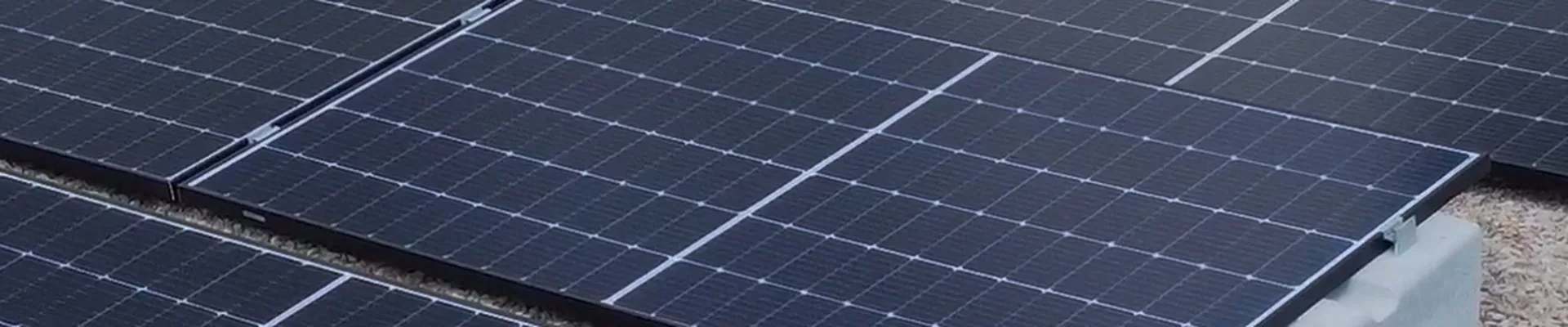
How Greentech Balear helps: design, quote, installation and maintenance
A grant is only valuable if the system works. Greentech Balear supports owners through a complete process: sizing, quote, installation, documentation and long-term readiness. For second homes, the workflow is designed to be remote-ready.
Remote-ready project plan (photos, reporting, handover)
Our second-home approach is built around predictability:
- Remote intake: usage pattern, arrival seasons, key loads (cooling, pool, EV charging).
- Site assessment: roof, shading, electrical setup, potential battery location.
- System design: PV and battery sized for self-consumption and resilience.
- Quote: transparent scope, component list, and timeline aligned to the FOTOPAR 2026 grant.
- Execution: scheduled works with minimal disruption and clear access planning.
- Photo report + handover: before/after documentation and monitoring access setup.
For many owners, the missing piece is ongoing readiness, not installation. That is why we often pair PV projects with a maintenance routine for second-home reliability: Home maintenance service (second-home readiness).
A second home should feel effortless. The system should be visible on your phone, not only on the roof.
Next step: request a quote via the form
If you want to use the FOTOPAR 2026 grant intelligently, start with a quote that matches your real use case. For a first sizing and budget, the following inputs are usually enough:
- Roof photos and basic roof type (flat/tiled), plus any shading notes.
- Whether the home is mostly used in spring/summer, or year-round.
- Key loads: cooling, hot water, pool equipment, EV charging, always-on devices.
- Your goal: self-consumption, resilience, comfort, or a mix.
From there, we can propose a PV + battery concept that fits the grant logic, respects coastal constraints, and remains manageable from abroad.
FAQs about the FOTOPAR 2026 grant (practical answers)
Who is eligible for the FOTOPAR 2026 grant?
The FOTOPAR 2026 grant targets private individuals and includes a domicile requirement in the Balearics. Always confirm your personal eligibility on the official CAIB page before proceeding.
What’s covered: PV/micro-wind and battery storage limits?
The scheme is designed to support residential renewable generation and storage, including PV within defined limits (commonly up to 5 kWp) and batteries up to 30 kWh, with potential micro-wind options depending on requirements.
Key dates: when can I apply and when must works be completed?
The application window runs from late January to 30 April 2026. After approval, works are typically expected within a limited period (often 4 months) and final justification by 31 October 2026.
What documents do owners abroad typically need to prepare?
Identity and domicile-related documentation (where required), a detailed technical quote, component data sheets, and later invoices and commissioning documents—plus a clean photo report for proof.
Is a battery worth it for a second home?
Often yes, because second homes have standby loads and evening comfort loads. A battery helps increase self-consumption and can improve resilience, especially when paired with monitoring.
How do I maximise self-consumption in a Mediterranean climate home?
Use scheduling: run flexible loads in daylight, keep setpoints realistic, add monitoring, and size the system to match real patterns. A battery can shift solar energy into evening hours.
Where can I get official guidance?
Use the official CAIB procedure page and the Energy Transition Offices for neutral support and practical guidance.
If you approach the FOTOPAR 2026 grant as a structured project—with early planning, clean documentation and a second-home mindset—you maximise the chance of approval and you end up with a system that genuinely improves your island lifestyle.
FOTOPAR 2026 grant can be the catalyst, but good design is what delivers the result.